
Do Your Therapists Have Any Group Therapy Training?

Most therapists have received no training or insufficient training in how to lead a therapy group. Graduate counseling students are only required to take one short course in group counseling while social work accreditation does not require any group work course for MSW students. Your staff may be facilitating groups without any training or education in it, which is not good practice!
Group therapy is distinctly different from individual therapy and requires unique skills, theories, and training. We can help your team develop these competencies. Dr. Scott Giacomucci is a Board-Certified Trainer, Educator, & Practitioner in Sociometry, Psychodrama, & Group Psychotherapy (TEP) and has received awards for his group work practice, scholarship, and teaching from multiple national or international group therapy societies (including ACA’s ASWG; IASWG; NASW; & ASGPP). He has taught group work courses in multiple countries, universities, addiction treatment centers, and outpatient centers.
Research continues to demonstrate that group therapy is at least as effective as individual therapy for a variety of mental health disorders and much more cost effective. The group therapy literature also highlights that professionals leading group without specialized training or supervision in group therapy tend to reinforce bad habits in their group leadership without opportunities for growth which often results in poor outcomes or harm to participants.
Interactive
Containment
Balance


Do Your Groups Actively & Creatively Engage Clients?

Many clients report that groups are boring and repetitive, especially for folks who have been in treatment multiple times. Are your staff able to actively engage group members beyond “check-ins” or lecturing to them? Incorporating some simple experiential therapy techniques into your groups can significantly increase the quality of your program and keep clients engaged in their treatment. Some programs we work with even found that their clients ask to stay in treatment longer to attend additional experiential/psychodrama groups.
Training your staff in experiential methods will pay for itself in longer client stays and improved satisfaction. Make your program stand out from the competition by offering experiential therapy and psychodrama groups. Dr. Scott is a psychodrama trainer and experiential therapy trainer and can provide training hours towards certifications in experiential therapy and psychodrama.
These training workshops not only provide new professional skills and CE hours – but also offer avenues for your staff to deepen relationships with each other, enhance team cohesion, engage in self-care and personal growth, while also addressing impacts of burnout and vicarious trauma.
Dr. Scott has provided training to thousands of professionals around the world including various programs in the Philadelphia area such as:
- Mirmont Treatment Center
- Mainline Health Systems
- Caron Treatment Center
- Pinelands Recovery Center
- Banyan Treatment Center
- Maryland Addiction Recovery Center
- Chester County Department of Human Services
- Women Organized Against Rape
- Spilove Psychotherapy
- Espenshade Counseling
- Manor of Hope
- Bryn Mawr College
- University of Pennsylvania
- Philadelphia College of Osteopathic Medicine
- West Chester University
- Denver University
- New Mexico State University
- Columbia University
- Neumann University
- Antioch University
- Widener University
- Penn State University
- International Universities
- Introduction to Sociometry, Psychodrama, and Experiential Trauma Therapy
- PTSD, CPTSD, Trauma-Informed Principles, and Post-Traumatic Growth
- The Intersection of Addiction and Trauma
- Experiential Group Treatment: Sociometry and Safety Structures
- An Experiential Trauma Therapy Clinical Map: Neurobiology and Safety
- Using Experiential Work to Transform Burnout, Compassion Fatigue, & Vicarious Trauma
- Working Experientially with Defenses in Addiction & Trauma Work
- Relational Trauma Repair: Psychosocial Metrics & Psychodrama-like Interventions
- Experiential Therapy Supervised Practice
- Psychodrama and Empty Chair Work in Individual Sessions
- Sociatry & Spirituality in Trauma and Addiction Work
- Strengths-based Experiential Work and the Empty Chair
- Role Theory, Doubling, and Attachment Theory
- Experiential Work with Loss, Ambiguous Loss, Traumatic Loss, and Resilience
- Group Work, Group Therapy, Mutual Aid, and the 12-steps
- Grief and Loss: Impacts on Clients and Staff
- The Aging Brain: When Dementia and Mental Health Overlap
- Introduction to Expressive Arts Therapies
- Healers’ Haven: Addressing Vicarious Trauma and Burnout
- Bringing IFS into Practice
- Other topics available upon request
The Phoenix Center is a pre-approved provider of CE Hours for National Board of Certified Counselors (NBCC), American Psychological Association (APA), and the Pennsylvania boards of Social Work, Marriage & Family Therapy, Professional Counseling, and Psychology. Any in-services trainings by Phoenix Center staff can provide these CEs plus training hours towards certifications in experiential therapy and psychodrama.
Our fee for organizational consultation or clinical training varies based on the nature of the organization, travel distance, number of participants, type of training, and workshop content. Workshops are individualized to meet your organizational needs/preferences and include the provision of CE hours and certificates. See fee schedule below:
- Small group workshops (under 35 people)
- $550/hr or $2750/day
- Large group workshops (35-75 people)
- $1000/hr or $4800/day
- Keynote presentations (and/or groups over 75 people)
- $2000/hr
*Reduced cost offerings are provided to non-profit organizations and international communities on a limited basis. Write to us if cost is the only thing holding you back from working together!
The Facilitator
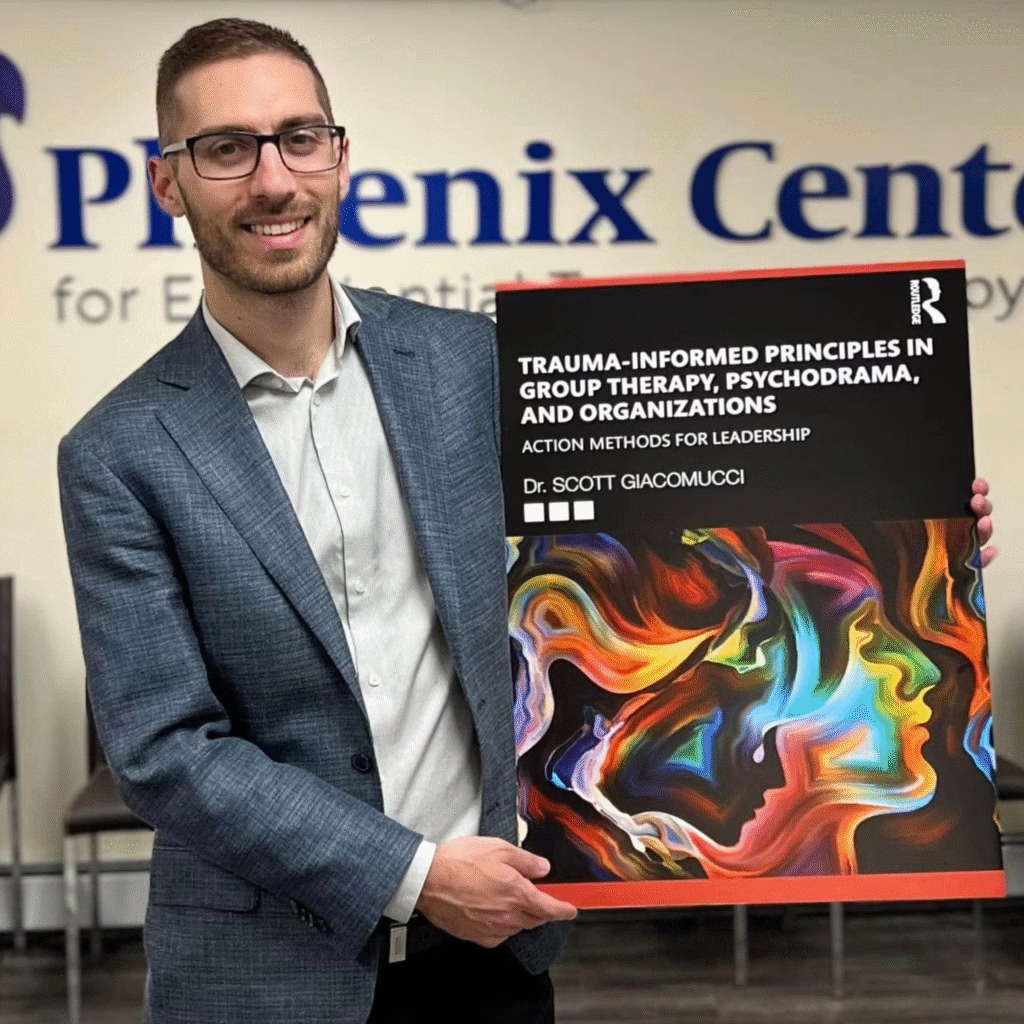
Dr. Scott Giacomucci’s work has been internationally recognized, and he is the recipient of various awards. He has published various articles on using experiential methods (especially sociometry, psychodrama, and group work) in clinical, educational, community, and organizational settings. Scott has taught trauma-focused psychodrama courses as an adjunct professor and research associate at Bryn Mawr College Graduate School of Social Work & Social Research, University of Pennsylvania’s Doctorate in Clinical Social Work Program, as well as Villanova University’s graduate counseling program.
Throughout his career, he has published several books that have been used in many graduate courses internationally. He is Co-Chief-Editor of the Journal of Psychodrama, Sociometry, and Group Psychotherapy. He is an active member of the International Association of Group Psychotherapy & Group Processes (IAGP) Social and Collective Trauma Committee and Psychodrama Division.