
Impacts on Clients and Staff

Grief and Loss are universal experiences, yet many of us do not receive adequate education on the grieving process, how to support clients through their losses, and how to effectively manage the vicarious trauma and countertransference that can often manifest in sessions with clients. On top of this, we too can also experience loss, not only in our personal lives, but in our professions. Whether it’s the loss of life, or a more ambiguous loss, such as jobs, relationships with co-workers, or a change in leadership, having a foundational understanding of the grieving process, and tools to utilize in the workplace, is essential for your team to maintain individual and group psychological safety.
Our Grief and Loss workshops will provide participants with foundational education on grief, loss, and bereavement. Focus will be placed on both supporting clients through loss and exploring the various losses and ambiguous losses that mental health professionals experience. Content will include an exploration of the grieving process for both children and adults while also highlighting the connection between loss and trauma. Utilizing didactic teaching components and experiential exercises, we will explore different models of understanding the grieving process.
Excellent
Examples
Informative

Workshop Outline (1/2 Day Option)
- Psychoeducation on grief, bereavement, and loss
- Defining bereavement, grief, loss (different types of loss including ambiguous loss (Pauline Boss)
- How does it look like? Stages of loss, cycle of loss and grief (Kubler-Ross & Kessler)
- Sociometry exercise to learn about the different stages of grief (10-15 mins)
- Grief & Trauma Connections
- Working with children
- Talking to children about death & developmental responses
- Supporting children
- Working with caregivers
- How to talk with children about death
- Modeling behaviors
- Supporting the grieving caregiver
- Experiencing loss as a mental health provider
- Ambiguous loss of our clients and professional relationships
- Disenfranchised grief
- Navigating client deaths as a professional
- Engaging in peer support around grief/loss
**This course is designed to be interactive with required participation from registered attendees**
Dr. Scott has provided training to thousands of professionals around the world including various programs in the Philadelphia area such as:
- Mirmont Treatment Center
- Mainline Health Systems
- Caron Treatment Center
- Pinelands Recovery Center
- Banyan Treatment Center
- Maryland Addiction Recovery Center
- Chester County Department of Human Services
- Women Organized Against Rape
- Spilove Psychotherapy
- Espenshade Counseling
- Manor of Hope
- Bryn Mawr College
- University of Pennsylvania
- Philadelphia College of Osteopathic Medicine
- West Chester University
- Denver University
- New Mexico State University
- Columbia University
- Neumann University
- Antioch University
- Widener University
- Penn State University
- International Universities
- Introduction to Sociometry, Psychodrama, and Experiential Trauma Therapy
- PTSD, CPTSD, Trauma-Informed Principles, and Post-Traumatic Growth
- The Intersection of Addiction and Trauma
- Experiential Group Treatment: Sociometry and Safety Structures
- An Experiential Trauma Therapy Clinical Map: Neurobiology and Safety
- Using Experiential Work to Transform Burnout, Compassion Fatigue, & Vicarious Trauma
- Working Experientially with Defenses in Addiction & Trauma Work
- Relational Trauma Repair: Psychosocial Metrics & Psychodrama-like Interventions
- Experiential Therapy Supervised Practice
- Psychodrama and Empty Chair Work in Individual Sessions
- Sociatry & Spirituality in Trauma and Addiction Work
- Strengths-based Experiential Work and the Empty Chair
- Role Theory, Doubling, and Attachment Theory
- Experiential Work with Loss, Ambiguous Loss, Traumatic Loss, and Resilience
- Group Work, Group Therapy, Mutual Aid, and the 12-steps
- The Aging Brain: When Dementia and Mental Health Overlap
- Introduction to Expressive Arts Therapies
- Healers’ Haven: Addressing Vicarious Trauma and Burnout
- Bringing IFS into Practice
- Other topics available upon request
The Phoenix Center is a pre-approved provider of CE Hours for National Board of Certified Counselors (NBCC), American Psychological Association (APA), and the Pennsylvania boards of Social Work, Marriage & Family Therapy, Professional Counseling, and Psychology. Any in-services trainings by Phoenix Center staff can provide these CEs plus training hours towards certifications in experiential therapy and psychodrama.
Our fee for organizational consultation or clinical training varies based on the nature of the organization, travel distance, number of participants, type of training, and workshop content. Workshops are individualized to meet your organizational needs/preferences and include the provision of CE hours and certificates. See fee schedule below:
- Small group workshops (under 35 people)
- $550/hr or $2750/day
- Large group workshops (35-75 people)
- $1000/hr or $4800/day
- Keynote presentations (and/or groups over 75 people)
- $2000/hr
*Reduced cost offerings are provided to non-profit organizations and international communities on a limited basis. Write to us if cost is the only thing holding you back from working together!
The Facilitators
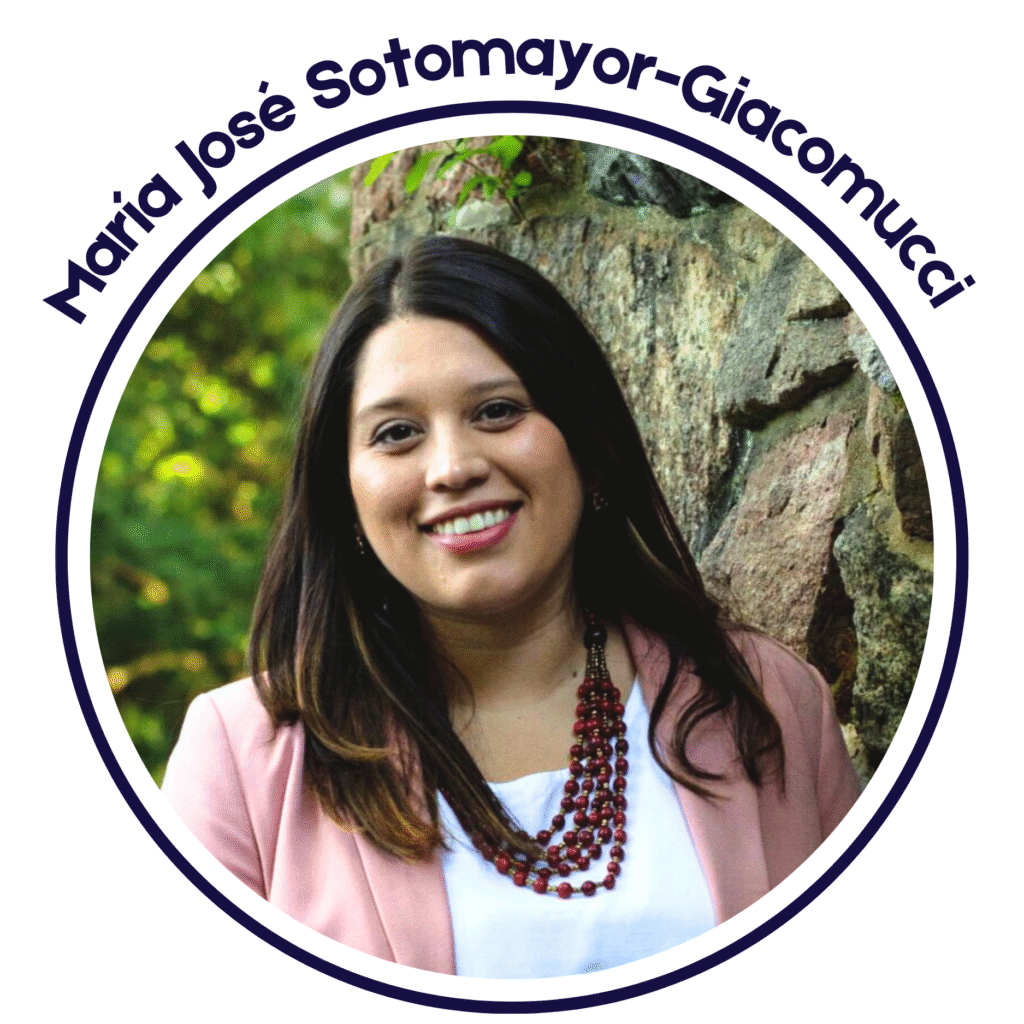
María José Sotomayor-Giacomucci, MSS, LCSW obtained her master’s in social services (equivalent to Social Work) with a clinical concentration from Bryn Mawr College and earned a B.A in Psychology and Minor in Communications from Neumann University. María José has completed advanced trauma therapy training in EMDR, and Emotionally Focused Therapy (EFT) with couples. She specializes in working with community activists, children 8 +, adolescents, adults, families and couples.
María José facilitates The Phoenix Center’s Grief and Loss Therapy Group and has facilitated numerous trainings and workshops on the topic. She is able to offer this workshop in English and Spanish.