

Written by Dr. Scott Giacomucci, DSW, LCSW, BCD, CGP, FAAETS, TEP
The Connection Between Trauma and Shame: How to Break Free from Trauma-Related Shame
Trauma and shame often go hand in hand. While trauma is something that happens to us, shame has a way of convincing us that we are the problem. For many trauma survivors, the emotional wounds don’t end when the traumatic event is over. Long after the experience has passed, shame can continue shaping how we see ourselves, our relationships, and our future.
The good news is that shame is not a permanent part of who you are. It can be understood, challenged, and healed.
Why Trauma Often Leads to Shame
Trauma is, by definition, an experience that overwhelms our ability to cope. When something terrifying, abusive, or deeply painful happens, especially during childhood, our brains naturally try to make sense of it.

Children, in particular, often lack the developmental ability to understand the complex circumstances surrounding trauma. Instead, they may arrive at painful conclusions like:
- “It must have been my fault.”
- “I deserved this.”
- “There’s something wrong with me.”
- “I’m broken.”
- “I’m unlovable.”
These beliefs are not facts. They are survival adaptations created by a mind trying to explain the unexplainable. Unfortunately, abusive individuals and dysfunctional family systems often reinforce these distorted beliefs, leaving survivors carrying emotional burdens that never belonged to them.
When the Shame of the Perpetrator Becomes Your Own
One of the most painful aspects of trauma is that survivors often absorb the shame of the person who caused the harm.
Psychologists sometimes describe this process as identification with the aggressor, a phenomenon in which the victim unconsciously internalizes the emotions, beliefs, and shame of the perpetrator. Instead of recognizing that the abuse reflected the actions of another person, survivors begin believing the abuse says something about who they are. This is one reason trauma-related shame can feel so deeply rooted.
Common Signs of Trauma-Related Shame

Trauma-related shame doesn’t always announce itself directly. Instead, it often shows up through patterns of thinking, feeling, and behaving.
Some common signs include:
A Harsh Inner Critic
Many trauma survivors speak to themselves in ways they would never speak to another person. Their internal dialogue becomes filled with criticism, perfectionistic demands, and relentless self-judgment.
Feeling Unworthy
Shame often creates a persistent belief that you’re undeserving of:
- Love
- Success
- Happiness
- Financial security
- Healthy relationships
- Freedom
Even when opportunities arise, shame may convince you that you don’t deserve them.
Avoiding Relationships or Opportunities
Shame often fuels fears like:
- “If people really knew me, they’d reject me.”
- “I’m too damaged.”
- “I’ll just fail anyway.”
These beliefs can lead people to avoid dating, friendships, promotions, new careers, or meaningful life experiences, not because they lack ability, but because they fear exposure or rejection.
People-Pleasing and Perfectionism

Sometimes shame doesn’t lead us to withdraw, it pushes us to overcompensate. People-pleasing, perfectionism, and codependent patterns are often attempts to earn worthiness by constantly meeting other people’s expectations. When we believe we’re fundamentally flawed, perfection can become an impossible strategy for trying to feel enough.
Losing Your Sense of Self
Trauma can disconnect us from who we truly are.
Instead of living from our authentic identity, we begin defining ourselves by the messages we received during the trauma. Psychology refers to these internalized messages as introjects, beliefs that originate outside of us but become accepted as if they are our own. Healing requires recognizing these messages and asking an important question:
“Whose voice is this?”
Healing Means Changing the Narrative
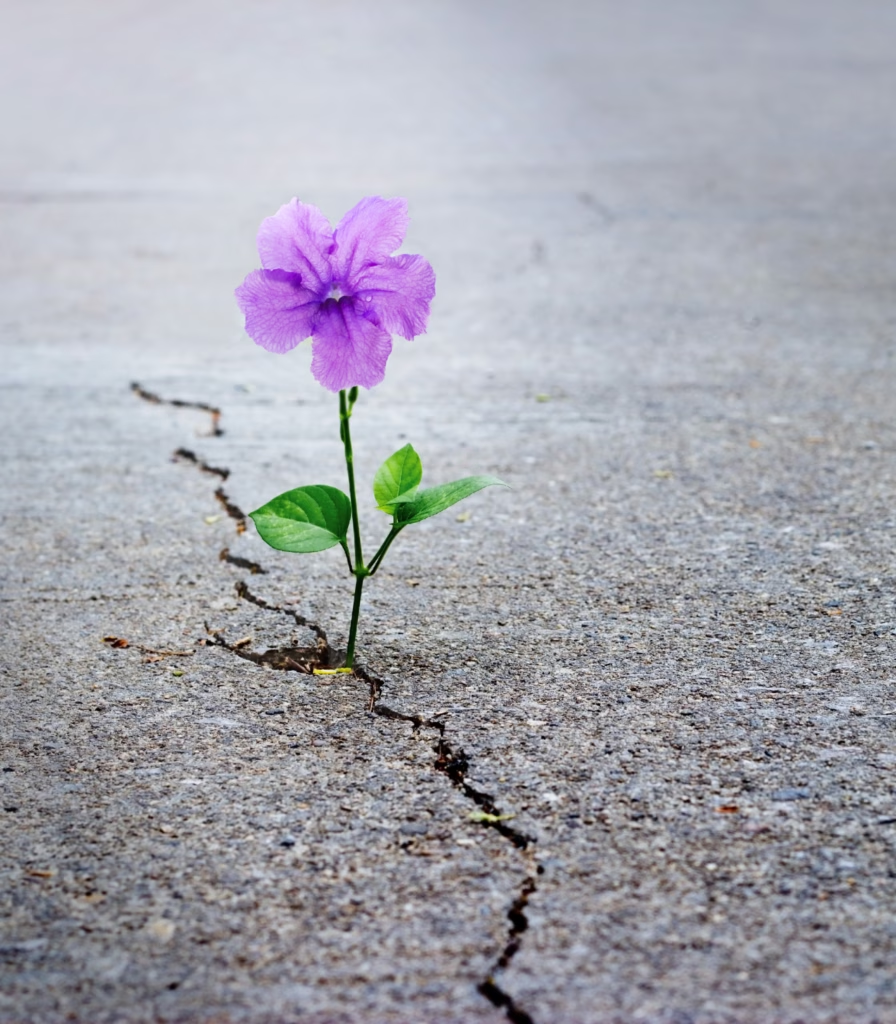
Recovery isn’t about pretending trauma never happened.
It’s about recognizing that trauma is something you experienced, not the definition of who you are. When shame becomes the center of our identity, every decision gets filtered through the belief that we’re defective.
Healing involves developing a new story:
- A story of resilience.
- A story of recovery.
- A story of growth.
The trauma remains part of that story, but it no longer defines the entire narrative.
Self-Compassion Is Essential
One of the most important skills in healing shame is learning self-compassion. Many survivors have spent years speaking to themselves with criticism, contempt, or unrealistic expectations.
Instead, try asking yourself:
How would I speak to someone I deeply love who had gone through what I’ve experienced?
You might even imagine how gently you’d care for a beloved pet. That same kindness is something you deserve as well. Self-compassion isn’t making excuses. It’s creating the emotional safety necessary for healing.
Shame Cannot Heal in Isolation

Shame thrives in silence. It grows stronger when we hide our experiences and believe we’re alone. Healing happens in safe relationships where we can be seen without judgment. Supportive therapy, trusted friendships, recovery groups, and compassionate communities provide experiences that directly challenge shame’s core message:
“If people knew the real me, they would reject me.”
When acceptance replaces secrecy, shame begins to lose its power.
Trauma Lives in the Body
Trauma isn’t stored only in our thoughts, it affects our nervous system and our bodies. Because of this, body-based approaches can be incredibly valuable in trauma recovery. Helpful interventions may include:
- EMDR
- Somatic therapies
- Somatic Experiencing
- Psychodrama
- Inner child work
- Breathwork
- Grounding practices
- Mindfulness
- Yoga
- Therapeutic movement and exercise
These approaches help people reconnect with their bodies, regulate their nervous systems, and process experiences that words alone often cannot reach.
Understanding the Difference Between Shame and Guilt
One of the most important shifts in recovery is learning the difference between shame and guilt.
Shame says:
“Something is wrong with me.”
Guilt says:
“I did something wrong,” or “Something wrong happened to me.”

That difference may seem subtle, but psychologically it is enormous. When we believe we are the problem, change feels impossible. When we recognize that behaviors can change, or that harmful experiences happened to us rather than defining us, hope becomes possible.
Research consistently shows that chronic shame is associated with increased risk for anxiety, depression, PTSD, substance use disorders, relationship difficulties, and many other mental health concerns. Healthy guilt, however, often supports accountability, growth, repair, and resilience.
The Shame Was Never Yours to Carry
Perhaps the most important truth to remember is this:
Healing from trauma often means letting go of shame that never belonged to you in the first place. The beliefs you formed during trauma may have helped you survive.
But they don’t have to determine the rest of your life. With support, self-compassion, and trauma-informed treatment, it is possible to release shame, reconnect with your authentic self, and move toward a life defined by healing rather than by what happened to you.
At the Phoenix Center for Experiential Trauma Therapy, we witness this transformation every day. Recovery is possible, and no one has to walk that path alone.
About the Author:

Dr. Scott Giacomucci, DSW, LCSW, BCD, CGP, FAAETS, TEP (he, him, his) is the Director, Founder, & Owner of the Phoenix Center for Experiential Trauma Therapy. He provides clinical services at the center as well as supervision, consultation, training, and organizational leadership.
Dr. Scott just released his most recent book, Trauma-Focused Psychodrama: Experiential Therapy for Complex PTSD















Leave a Reply