

EMDR Consultation is an essential component of ongoing learning, EMDR certification, and ongoing practice for any EMDR therapist. EMDR consultation helps you strengthen your clinical skills, deepen your understanding of the EMDR model, and receive personalized support as you work toward EMDR certification and/or the implementation of EMDR in your clinical work.
Dr. Scott Giacomucci is an EMDRIA Approved Consultant and offers EMDR consultation for clinicians who have completed EMDR basic training and want to become more confident, intentional, and effective in their use of Eye Movement Desensitization and Reprocessing therapy. Consultation sessions can help you adapt EMDR into your clinical practice while receiving guidance related to case conceptualization, treatment planning, client preparation, reprocessing, preventing harm, and complex clinical situations. Scott has experience utilizing EMDR and providing EMDR consultation for professionals across the entire treatment continuum – inpatient, PHP, IOP, and outpatient settings. He also frequently uses EMDR in 1-1 intensive sessions that range from multiple hours to multiple days with clients. Scott has provided consultation for dozens of EMDR therapists and his EMDR videos on YouTube have reached over 300,000 views.
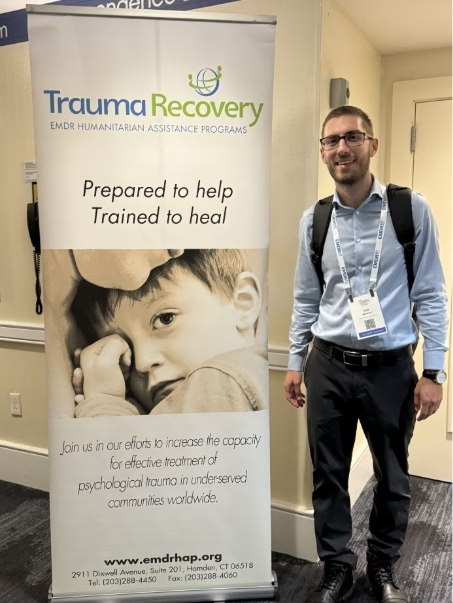
Scott has experience utilizing EMDR with a broad range of clinical issues including sexual trauma, complex trauma, traumatic loss, identity-based trauma, military and first responder trauma, violence, birth trauma, medical trauma, car accidents, natural disasters, phobias, panic attacks, anxiety, depression, psychosomatic pain, dissociation, addictions, neglect, abandonment, divorce, professionals’ vicarious trauma, and performance anxiety.
Scott offers individual EMDR consultation for $200/hour.
Scott also offers a new EMDR Consultation group for $60/session.
Why is EMDR Consultation Important?
Completing EMDR basic training provides clinicians with a foundation for using the EMDR therapy model. However, developing competence and confidence with EMDR requires continued practice, reflection, and consultation.
Clinicians often encounter questions that cannot be fully addressed during basic training:
- How do I know when a client is ready for EMDR reprocessing?
- What other EMDR Resources can I use to support my clients?
- What should I do when EMDR processing becomes blocked?
- How can I use EMDR with complex trauma or dissociation?
- How do I use memory mapping and identify appropriate EMDR targets?
- How closely should I follow the standard EMDR protocol and scripts?
- What if I don’t get to all three prongs of EMDR (past, present, and future) with a client?
- What should I do when a client becomes overwhelmed or emotionally shut down during EMDR?
- How can I integrate EMDR with other therapeutic approaches?
- How do I document EMDR sessions appropriately?
- What has changed in EMDR’s protocols since my basic training years ago (note there was a 2023 training manual update)?
- What new research findings and protocols have emerged since my EMDR training?
- How do I use modified protocols such as EMD, EMDR, flash technique, and recent event protocol?
EMDR consultation provides a collaborative space to explore these questions, review clinical cases, and translate EMDR theory into thoughtful clinical practice.

Clinicians pursuing the EMDRIA Certified Therapist™ credential are currently required to complete additional clinical practice, continuing education, and EMDR-focused consultation beyond their basic training. EMDRIA identifies 20 hours of consultation as part of its certification requirements, including at least 10 hours of individual consultation.
EMDRIA identifies 20 hours of consultation as part of its certification requirements, including at least 10 hours of individual consultation. Clinicians should review the current EMDRIA requirements before beginning the certification process.
The goal is not to create rigid or robotic EMDR therapists. The goal is to help clinicians use the structure of the EMDR model while remaining relational, flexible, trauma-informed, and responsive to the needs of the person in front of them. EMDR can feel really structured at times, but after basic training I want to support you in bringing yourself and all your clinical skills into the role of EMDR therapist.
EMDR Consultation for Complex Trauma
Using EMDR with complex trauma may require additional attention to preparation, pacing, dissociation, attachment patterns, internal conflict, emotional regulation, memory mapping, and the therapeutic relationship. The risk of harm during EMDR therapy increases significantly when working with complex PTSD and complex trauma.
Clients with complex PTSD may present with multiple traumatic experiences, overlapping targets, chronic shame, difficulty trusting others, internalized negative beliefs, dissociative responses, or fear of becoming emotionally overwhelmed. Clinicians may be uncertain about where to begin or how quickly to proceed.

Consultation provides an opportunity to slow down, examine the larger treatment process, and develop an intentional plan grounded in the client’s strengths, needs, history, and current capacity.
EMDR Consultation with Dr. Scott Giacomucci

Dr. Scott Giacomucci is an experienced trauma therapist, educator, researcher, author, and international trainer. He has been utilizing EMDR since 2014 in his clinical work and supporting other clinicians in their development as EMDR therapists for over 10 years. Scott is certified as an EMDR Consultant through EMDRIA and also approved as an EMDR HAP Consultant.
He has provided individual and group EMDR consultation for over 100 professionals working in various settings from inpatient, PHP, IOP, and outpatient. His consultation style is supportive, relational, practical, and grounded in respect for both the clinician and the client. Consultation sessions balance attention to EMDR theory and procedural fidelity with the realities and complexities of clinical practice.
Individual EMDR consultation offers personalized time to examine your clinical work, ask questions, and receive focused feedback. Consultation is educational and collaborative. It is not psychotherapy and does not replace clinical supervision when supervision is required by an employer or licensing board. EMDR Consultation may include case presentations, discussions of EMDR theory and interventions, reviewing EMDR session recordings, asking questions, building confidence, exploring how to integrate other modalities into EMDR, and working towards certification.


Schedule an EMDR consultation today and take the next step toward EMDR certification and more confident EMDR practice.
Contact the Phoenix Center for Experiential Trauma Therapy to learn more about EMDR consultation with Dr. Scott Giacomucci or to schedule a consultation session.