

The Phoenix Center for Experiential Trauma Therapy provides training to thousands of professionals around the world each year. From non-profits to large-scale healthcare providers, we are known for delivering high quality, engaging, and trauma-informed training for professionals. Whether you are a small team of clinical providers, or a large corporation seeking to enhance your emerging leaders, our continuing education workshops can be adapted to meet your unique, and sometimes, complex needs.
We offer many different training topics, including the examples below, but can also create unique workshops centered around the dynamics of your team and services. While many of our trainings are geared towards mental health providers, most topics can be adapted and utilized in any field to foster team cohesion and bring teams closer together.
Full List of Workshops (Alphabetical)
This is not a comprehensive list, contact us about your training needs.
This workshop will provide participants with foundational education on grief, loss, and bereavement. Focus will be placed on both supporting clients through loss and exploring the various losses and ambiguous losses that mental health professionals experience. Content will include an exploration of the grieving process for both children and adults while also highlighting the connection between loss and trauma.
Many clients report that groups are boring and repetitive, especially for folks who have been in treatment multiple times. Are your staff able to actively engage group members beyond “check-ins” or lecturing to them? Incorporating some simple experiential therapy techniques into your groups can significantly increase the quality of your program and keep clients engaged in their treatment. Some programs we work with even found that their clients ask to stay in treatment longer to attend additional experiential/psychodrama groups.
Your team gives their heart and mind fully to their clients. This inevitably pushes them up against the limits of their attention – as they are affected by both the trauma conveyed in the stories they hear, and the unhealed trauma and/or vicarious trauma that already exists within them. If unresolved, these can challenge even your most experienced clinicians with deep emotions and difficult thoughts, which can negatively impact every aspect of their life. If, however, they get a chance to process these emotions regularly, they will be more relaxed and present, leading to better client/patient outcomes and treatment satisfaction.
Trauma-Informed Care and Gender Affirming care should be synonymous when providing safe and ethical care for all clients, which requires both introductory and continuous learning. This workshop offers a full, comprehensive overview of both Trauma-Informed Care and Gender Affirming care, to create affirming practices for all clients, including those who are transgender, non-binary, and gender-expansive. We will explore how to create trust and transparency, build safer emotional spaces, and learn how to support each other through current changes to Gender Affirming Care.
Training your staff in psychodrama and experiential methods will pay for itself in longer client stays and improved satisfaction. Make your program stand out from the competition by offering experiential therapy and psychodrama groups. Dr. Scott is a psychodrama trainer and experiential therapy trainer and can provide training hours towards certifications in experiential therapy and psychodrama.
The stronger the team cohesion, the stronger the organization. Workplace teams are groups that function best when group cohesion is high and relationships are strong. Team building exercises can help enrich relationships, communication, and team cohesion – which has been demonstrated to enhance safety, effectiveness, performance, and job satisfaction.
Whether you are looking to rejuvenate your workplace, bounce back after an adverse work event or difficult period of time, integrate new members into an already tight-knit team, or reward your staff with a fun and meaningful experience – we can tailor a workshop to your vision and your needs!
When examining mental health and dementia, they may seem very different, but both fundamentally involve the brain and can significantly affect daily life. As mental health professionals, we can help reduce risk factors associated with developing dementia, which often begin in early life. In this workshop, we will explore the connection that exists between dementia, mental health, and trauma, explore brain changes, and learn how mental health conditions impact cognitive changes, and how psychiatric conditions manifest in the presence of dementia.
If you are serving humans, you are serving trauma survivors. Every program claims to be “trauma-informed” nowadays. But has your organization really incorporated SAMHSA’s six trauma-informed principles into its services, its supervision/leadership, its policies, and the layout of the physical facility?
We can help teach your clinicians, leadership, and non-clinical frontline staff how trauma impacts the body and the mind. We can help your employees recognize the difference between a trauma response and a defiant or resistant response from a client.
This workshop is designed for professionals working or interested in working with immigrant and refugee communities. This workshop will explore trauma-informed approaches to enhance culturally sensitive care, support resilience, and address the unique challenges these populations face. Participants will gain actionable strategies to integrate into their practice while staying informed about the rights of immigrants and refugees and the impact of current policies.
Many clients carry invisible wounds from harmful religious experiences, shame, fear, self-doubt, and a fractured sense of spiritual belonging. As clinicians, we must develop the language, tools, and self-awareness to walk with them through deconstruction and healing. Attendees will learn how to recognize the symptoms of religious trauma, respond appropriately, and utilize experiential modalities to foster healing and growth.
Addressing vicarious trauma and burnout within our teams is essential to workplace wellness and ensuring positive client outcomes. Many studies suggest that vicarious trauma and burnout are also caused by organizational demands and systemic problems, more so than only from hearing patients’ trauma stories. Vicarious trauma and burnout are expected job hazards of helping professions, and it is a shared responsibility between individual staff and the organization to work together to address vicarious trauma and burnout
- Introduction to Sociometry, Psychodrama, and Experiential Trauma Therapy
- PTSD, CPTSD, Trauma-Informed Principles, and Post-Traumatic Growth
- The Intersection of Addiction and Trauma
- Experiential Group Treatment: Sociometry and Safety Structures
- An Experiential Trauma Therapy Clinical Map: Neurobiology and Safety
- Using Experiential Work to Transform Burnout, Compassion Fatigue, & Vicarious Trauma
- Working Experientially with Defenses in Addiction & Trauma Work
- Relational Trauma Repair: Psychosocial Metrics & Psychodrama-like Interventions
- Experiential Therapy Supervised Practice
- Psychodrama and Empty Chair Work in Individual Sessions
- Society & Spirituality in Trauma and Addiction Work
- Strengths-based Experiential Work and the Empty Chair
- Role Theory, Doubling, and Attachment Theory
- Experiential Work with Loss, Ambiguous Loss, Traumatic Loss, and Resilience
- Group Work, Group Therapy, Mutual Aid, and the 12-steps
Workshops by Topic
This is not a comprehensive list, additional workshops available.
Workshops by Facilitator
This is not a comprehensive list, additional workshops available.




Dr. Scott Giacomucci
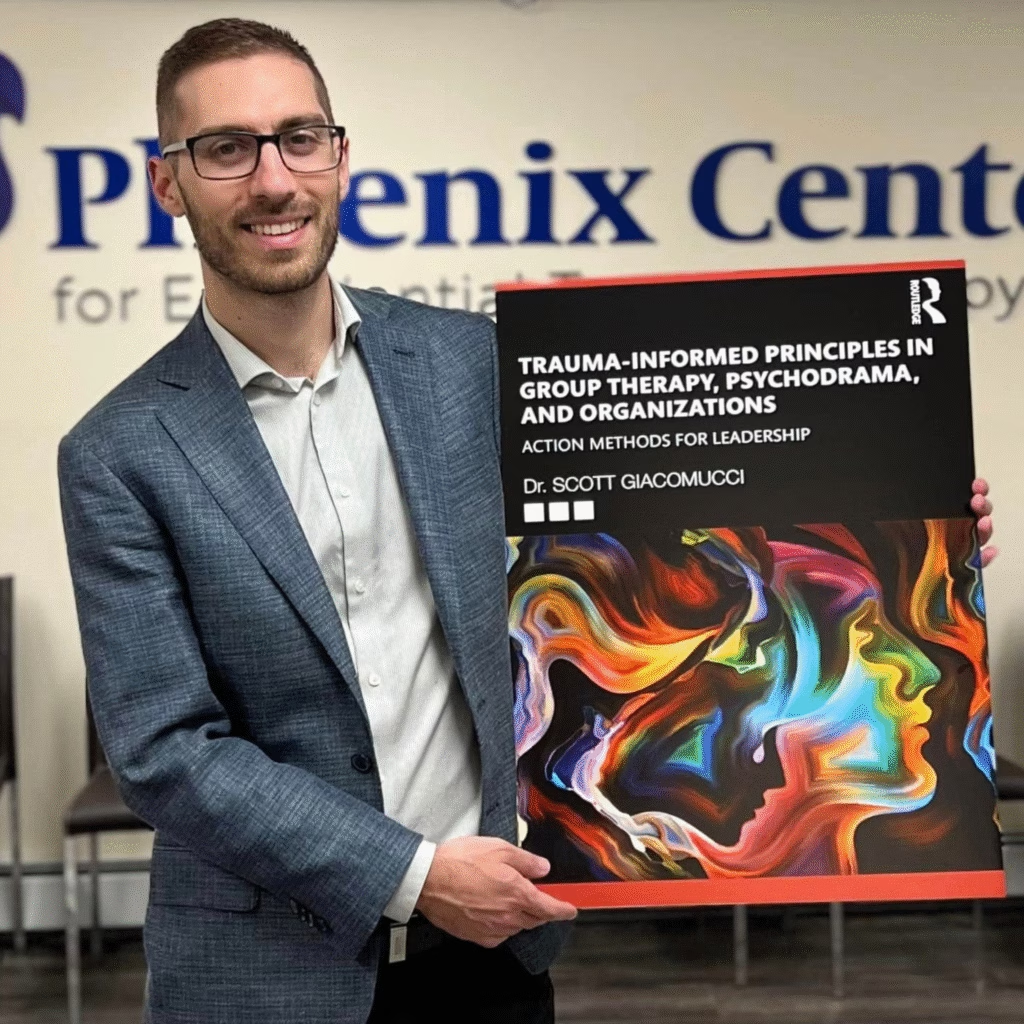
Dr. Scott’s work has been internationally recognized and he is the recipient of various awards. He also frequently presents continuing education workshops at local, national, and international events, and has published various articles on using experiential methods (especially sociometry, psychodrama, and group work) in clinical, educational, community, and organizational settings.
Additionally, Scott has taught trauma-focused psychodrama courses as an adjunct professor and research associate at Bryn Mawr College Graduate School of Social Work & Social Research, University of Pennsylvania’s Doctorate in Clinical Social Work Program, as well as Villanova University’s graduate counseling program.
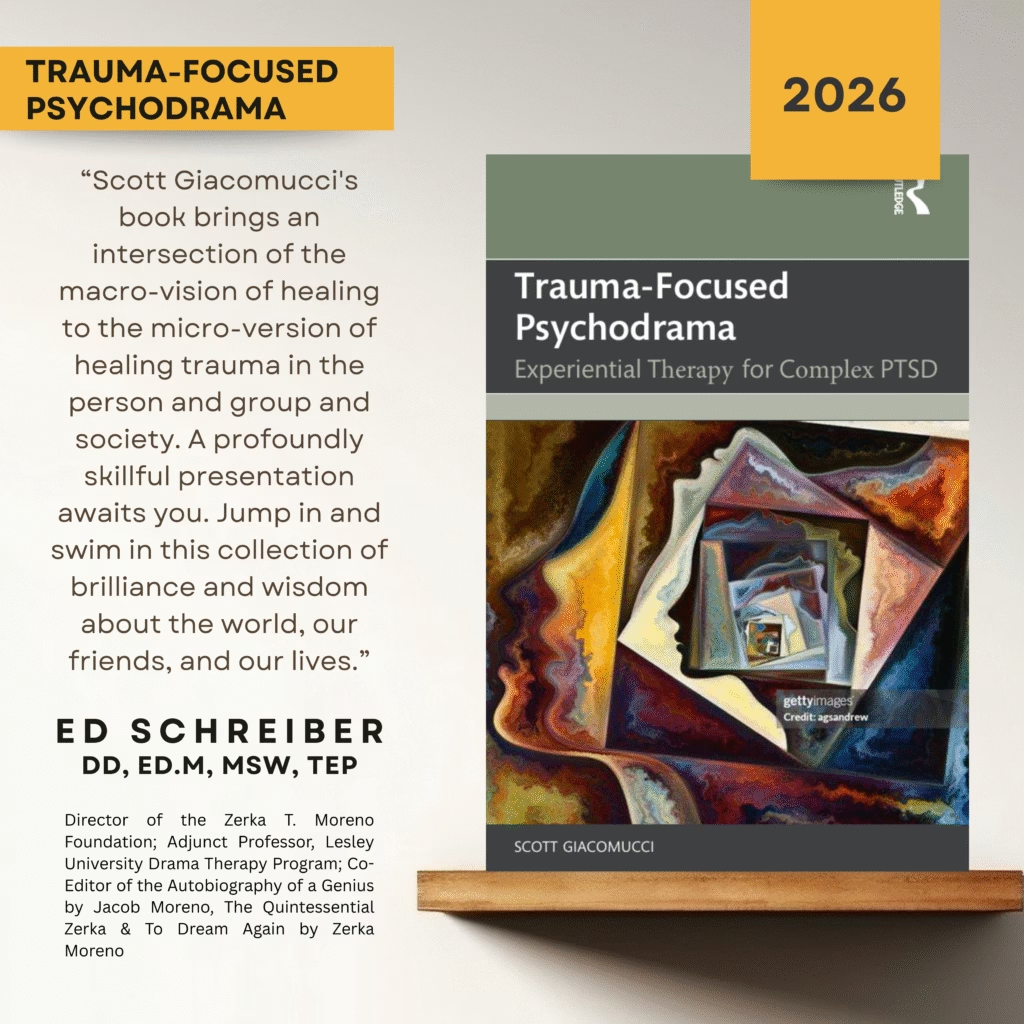
Throughout his career, he has published several books that have been used in many graduate courses internationally. He is Co-Chief-Editor of the Journal of Psychodrama, Sociometry, and Group Psychotherapy. He is an active member of the International Association of Group Psychotherapy & Group Processes (IAGP) Social and Collective Trauma Committee and Psychodrama Division.
Local, National, and International Travel
Our Center is located just south of Philadelphia, PA, and we consider less than 90 minutes to be local travel. Our team is available to travel nationally, or internationally, but separate travel rates may apply. Please contact us, or fill out our training inquiry form, and we can discuss all available options.
Continuing Education Hours
We are pre-approved to provide Continuing Education Hours through:
- The National Board of Certified Counselors (NBCC – recognized nationally)
- Pennsylvania State Board of Social Workers, Marriage and Family Therapists and Professional Counselors (LPC, LMFT, LCSW)
- Pennsylvania State Board of Psychology (Psy.D.)
Continuing Education Workshops: Cost and General Rates
Our fee for organizational consultation or continuing education varies based on the nature of the organization, travel distance, number of participants, type of training, and workshop content. Workshops are individualized to meet your organizational needs/preferences and include the provision of CE hours and certificates. Rates may vary based on trainer.
Standard Rates
- Small group workshops (under 35 people) -$550/hr or $2750/day
- Large group workshops (35-75 people) -$1000/hr or $4800/day
- Keynote presentations (and/or groups over 75 people) -$2000/hr
* Reduced cost offerings provided to non-profit organizations and international communities on a limited basis. Write to us if cost is the only thing holding you back from working together!