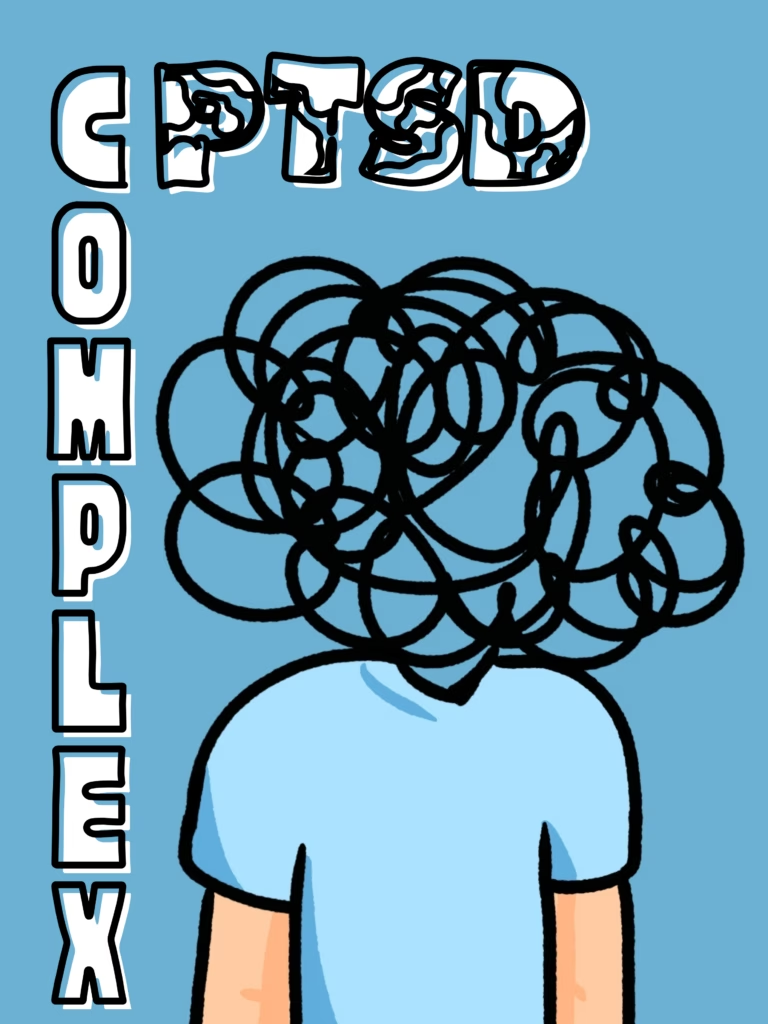

Category: Complex PTSD

AI is a Bad Therapist

Written by: Dr. Scott Giacomucci, DSW, LCSW, BCD, CGP, FAAETS, TEP

Artificial intelligence (AI) has become quite popular in recent years as it is remarkably good at answering questions, summarizing information, and even carrying on conversations that feel surprisingly human. It is now common for people to talk to AI about anxiety, trauma, relationships, grief, or depression before ever reaching out to a therapist.

While AI can be a useful educational tool or source of gathering general information (we use it as a tool too!), it is a poor substitute for psychotherapy. In some cases, relying on AI as a therapist may actually reinforce the very mental health symptoms you are trying to overcome. If you’re struggling with emotional distress, trauma, or relationship difficulties, it’s important to understand the difference between talking to AI and engaging with a trained mental health professional.

Why AI Can Feel Like a Good (Free) Therapist

There are understandable reasons people turn to AI for emotional support. AI is available 24 hours a day. It doesn’t judge. It responds immediately. It can be accessed for free. It can validate emotions, summarize psychological concepts, and offer coping suggestions within seconds. For someone who feels isolated or overwhelmed, this can provide temporary comfort.

Using AI for therapy

For many people, accessing therapy can be complicated – especially in trying to navigate complex health care systems, insurance benefits, unaffordable self-pay rates, and limited local options for therapy. Many people have had bad experiences, or even hurtful experiences, with therapists in the past which can also contribute to someone turning to AI as a therapist instead of a human therapist. For many, AI isn’t replacing therapy, it is filling a gap created by systemic failures and those realities deserve serious attention. The concern isn’t that people are using AI; my concern is when AI becomes the primary place where someone is seeking psychological healing and guidance on human relationships.

AI has access to enormous amounts of information on the internet which is pretty impressive. This can leave us with an assumption that AI is more knowledgeable than any human and thus better equipped to help us. However, AI’s responses are generated from general information on the internet and the limited text-based information that you provide it – whereas a human therapist is interacting with you based on more individualized and context-specific information while also considering the rich non-verbal communication in the session.
The problem is that therapy is much more than receiving information, identifying patterns, or receiving reassurance.

Therapy Is More Than Advice

Many people assume therapy is simply receiving good advice. In reality, effective psychotherapy is built on much deeper processes than advice giving. Many of us avoid giving advice in most cases and instead focus therapy on helping clients discover their own answers to questions.

Healing often occurs through:

  • A genuine therapeutic relationship
  • Emotional attunement
  • Embodied somatic experiences
  • Corrective interpersonal experiences
  • Exploration of unconscious patterns
  • Experiential learning
  • Working through difficult emotions
  • Repairing ruptures in relationships
  • Building tolerance for uncertainty
  • Developing new ways of relating to oneself and others

These are fundamentally human processes.

An AI can simulate empathy through its responses, but it cannot genuinely experience empathy, emotional resonance, or a mutual human relationship. It cannot notice subtle shifts in body language, changes in affect, or patterns emerging across interactions in the same way an experienced therapist can.

Many therapy modalities involve complex experiential interventions, such as EMDR, psychodrama and empty chair work, and expressive arts therapies. These interventions are action-based and three-dimensional. They can’t be effectively and safely be implemented by a two-dimensional AI program through a computer screen.

AI Can Accidentally Reinforce Mental Health Symptoms

One of the biggest concerns is that AI often responds in ways that reduce immediate distress rather than promote long-term wellness or recovery. Many psychological disorders are maintained by patterns of avoidance, reassurance-seeking, compulsive checking, or distorted thinking. Unfortunately, AI conversations often unintentionally strengthen these patterns. One of the most common ways that this happens is when someone avoids asking for help or going to therapy and instead only talks to AI about their struggles.

Anxiety

People with anxiety often seek certainty. They repeatedly ask questions like:

  • “Do you think something is wrong with me?”
  • “What if this symptom means I have cancer?”
  • “What if I lose my job?”

Each reassuring response may temporarily reduce anxiety.

Instead of searching websites, someone experiencing health anxiety may repeatedly question AI about symptoms, diagnoses, medications, or rare illnesses. Although each conversation may temporarily reduce fear, it often increases vigilance toward bodily sensations and reinforces the belief that constant checking is necessary to stay safe. This can create an endless feedback loop of symptom monitoring and reassurance that maintains health anxiety.

Unfortunately, this teaches the brain that reassurance, not tolerance of uncertainty, is the solution. Over time, reassurance-seeking often strengthens anxiety rather than reducing it. Instead of helping someone build tolerance for uncertainty, repeated AI interactions may strengthen dependence on external validation.

Someone may begin asking AI dozens or even hundreds of questions every day, creating a digital version of an anxiety compulsion.

Obsessive-Compulsive Disorder (OCD)

For individuals with OCD, AI can become another source of compulsive reassurance. Someone may repeatedly ask:

  • “Are you sure I didn’t do something wrong?”
  • “Does this sound like OCD or psychosis?”
  • “Can you guarantee this won’t happen?”

Each response briefly lowers anxiety. However, evidence-based treatments for OCD, such as Exposure and Response Prevention (ERP), intentionally reduce reassurance because learning to tolerate uncertainty is what weakens obsessive-compulsive cycles.

Frequent AI reassurance may unintentionally reinforce OCD symptoms or become part of a new compulsive-driven ritual that maintains the OCD symptoms.

Depression

Many people with depression become trapped in cycles of rumination – repetitively analyzing past events, perceived failures, or negative beliefs about themselves.

rumination and AI

AI may respond thoughtfully and compassionately, but lengthy conversations about depressive thoughts can sometimes encourage additional rumination instead of behavioral change. Depression often tricks people into believing that if they just think about the problem a little longer, they’ll finally figure it out. Unfortunately, rumination rarely produces clarity, it usually produces more rumination. Spending another hour discussing the same hopeless thoughts with AI may feel productive, but it can unintentionally deepen the habit of living in the problem rather than moving toward life outside of it.

Depression often narrows perspective and reinforces negative beliefs.

If someone consistently frames experiences through hopelessness or self-criticism, AI may respond with validation that unintentionally strengthens those beliefs without adequately challenging cognitive distortions or helping create meaningful behavioral change.

Similarly, depression often involves withdrawal from meaningful activities, relationships, work, and hobbies. Talking with AI can sometimes become another sedentary activity that replaces rather than supports real-world engagement.

While reflective conversations have value, recovery from depression often requires doing something different and taking new action, not simply thinking differently. In many recovery communities, we say that “you can’t think your way into new behaviors, you must act your way into new thinking”.

Effective therapy balances empathy with gentle challenges, accountability, and action.

Trauma, PTSD, and CPTSD

Many individuals with PTSD or CPTS have experienced ongoing interpersonal trauma, neglect, betrayal, or attachment wounds. Because relationships have been sources of pain in the past, trusting another person often feels difficult or impossible.

AI can feel safer as it is consistently available, doesn’t disappoint, and won’t reject you. While these qualities provide temporary comfort, they can also make it easier to avoid the vulnerability required for healing relationships.

AI Therapy and Trauma

Much of the healing in complex trauma occurs through experiencing a consistent, trustworthy therapeutic relationship where safety, boundaries, repair, emotional attunement, and authenticity are experienced over time. These relational experiences cannot be fully simulated through conversation with software.

For some individuals, relying primarily on AI for emotional support may unintentionally reinforce interpersonal avoidance and delay opportunities for corrective relational experiences and a more fulfilling trauma recovery journey.

Trauma recovery involves much more than talking about traumatic experiences.

It requires careful pacing, emotional regulation, nervous system stabilization, and gradually integrating traumatic memories without overwhelming the individual. Trauma therapy is a process of changing our relationships to the trauma within us.

AI cannot monitor physiological arousal, recognize dissociation, assess safety in real time, or modify interventions based on subtle changes in emotional regulation.

As a result, individuals may repeatedly revisit traumatic memories without adequate preparation, containment, or integration. In some cases, repeatedly recounting trauma without processing it may strengthen traumatic memory networks rather than transforming them.

Trauma work requires a therapist who can recognize when someone is becoming overwhelmed, emotionally shut down, or disconnected from the present moment. Trauma recovery involves developing new emotional, relational, and physiological experiences – not simply generating more words about painful events and receiving validation.

AI Will Tell You What You Want to Hear

Another concern is that AI is generally designed to be helpful, agreeable, and cooperative. While this usually improves user experience, it can reinforce existing beliefs rather than gently challenging them. Even when you ask AI not to only tell you what it thinks you want to hear, it will eventually revert back to doing so.

Therapists routinely ask difficult questions, notice inconsistencies, help clients recognize blind spots and carefully confront avoidance. Sometimes growth comes from hearing something that is uncomfortable, but necessary.

If every interaction with AI (or a therapist) simply confirms your current perspective, emotional growth will be limited.

Where AI Can Be Helpful

None of this means AI has no role in mental health or should be avoided completely. AI can be useful for many things including:

  • Learning about mental health conditions
  • Understanding therapy concepts
  • Practicing mindfulness exercises
  • Organizing thoughts before therapy
  • Journaling prompts
  • Psychoeducation
  • Identifying questions to ask a therapist
  • Reviewing coping skills between sessions
  • Summarizing notes after therapy (while protecting privacy)

Used this way, AI functions best as an educational assistant, not as a therapist. Though be sure to instruct AI to only get info from reputable sources, otherwise it will take any information from the internet (including teenagers’ reddit conversations) and present it to you as factual information.

AI is a Bad Therapist, but a Good Therapy Tool

While AI may provide comfort, information, or temporary reassurance, it cannot replace the depth of human connection, clinical judgment, emotional attunement, ethical responsibility, or relational healing that psychotherapy offers. In some situations, frequent reliance on AI for reassurance or emotional support may actually strengthen anxiety, OCD, PTSD, avoidance, or other mental health symptoms by reinforcing the patterns that keep those conditions alive.

It’s worth noting that these concerns aren’t even unique to AI. The same processes can occur with Google searches, Reddit forums, online mental health communities, well-meaning family members, or poorly trained therapists who provide endless reassurance while avoiding uncomfortable conversations or providing new corrective experiences. AI simply reinforces these patterns faster and in a way that is accessible at all times.

If you’re struggling with trauma, anxiety, depression, or relationship difficulties, AI may be a helpful supplement for learning and personal growth, but it should not replace working with a qualified mental health professional.

About the Author:

Dr. Scott Giacomucci

Dr. Scott Giacomucci, DSW, LCSW, BCD, CGP, FAAETS, TEP (he, him, his) is the Director, Founder, & Owner of the Phoenix Center for Experiential Trauma Therapy. He provides clinical services at the center as well as supervision, consultation, training, and organizational leadership.

Dr. Scott just released his most recent book, Trauma-Focused Psychodrama: Experiential Therapy for Complex PTSD

Treatment for Complex PTSD and Complex Trauma

Written by: Dr. Scott Giacomucci, DSW, LCSW, BCD, CGP, FAAETS, TEP
Complex PTSD Treatment

Many people are familiar with Post-Traumatic Stress Disorder (PTSD), but fewer have heard of Complex PTSD (CPTSD). While PTSD often develops following a single traumatic event, Complex PTSD typically results from repeated, prolonged, or interpersonal trauma. Experiences such as childhood abuse or neglect, domestic violence, chronic bullying, emotional abuse, identity-based trauma, community violence, or other long-term adverse experiences can contribute to the development of CPTSD.

If you struggle with persistent anxiety, depression, shame, emotional overwhelm or numbness, relationship difficulties, low self-worth, or feeling disconnected from yourself and others, you might be experiencing Complex PTSD. Fortunately, effective treatment is available.

What Is Complex PTSD?

Complex PTSD includes the same symptoms associated with PTSD, such as intrusive memories, nightmares, hypervigilance, avoidance, dissociation, and emotional distress related to past experiences. However, CPTSD also affects how people view themselves, manage emotions, and relate to others.

Common symptoms of Complex PTSD include:

  • Difficulty regulating emotions
  • Emotional numbness or disconnection
  • Negative beliefs about self
  • Persistent feelings of shame, guilt, or worthlessness
  • Difficulties trusting others
  • Relationship struggles
  • Feeling stuck in survival mode
  • Chronic anxiety or depression

Many individuals with CPTSD have spent years adapting to difficult environments. The coping strategies that once helped them survive may now interfere with their ability to fully engage in life, relationships, work, and personal growth.

Why Complex PTSD Requires Specialized Treatment

Complex PTSD is not simply a collection of symptoms. It reflects the impact that repeated trauma can have on a person’s nervous system, identity, relationships, and worldview. Healing requires more than simply reducing the negative effects of the trauma – it must also include a focus on building a life in trauma recovery and cultivating growth after trauma. Effective treatment addresses both the traumatic experiences themselves and the ways those experiences continue to shape present-day thoughts, emotions, behaviors, and relationships.

Treatment needs to be tailored to each person’s unique experiences, strengths, goals, and identity. There is no one-size-fits-all approach.

Effective Experiential Treatments for Complex PTSD

EMDR Therapy

EMDR for Complex PTSD or CPTST

Eye Movement Desensitization and Reprocessing (EMDR) is one of the most researched trauma therapies available. EMDR helps individuals process traumatic memories that may continue to contribute to emotional distress, negative beliefs, and survival-based reactions. Rather than repeatedly talking about traumatic experiences, EMDR helps the brain reprocess and integrate difficult memories so they become less emotionally overwhelming and disruptive.

The EMDR process includes developing internal resources to cope with difficult emotions, processing past traumatic memories, desensitizing present-day triggers, and creating a vision for the future about how to respond differently in previously triggering situations.

When engaging in EMDR therapy, it is important to work with a professional who truly understands complex trauma and CPTSD. The EMDR process will need to be modified slightly to reduce risks of overwhelm and harm while increasing effectiveness in addressing CPTSD.

Somatic Therapy

Complex trauma affects the nervous system and the body. Learning to recognize physical sensations, regulate activation, and reconnect with the present moment can be an important part of recovery.

Somatic Therapy for CPTSD Treatment

Somatic and mindfulness-based interventions help individuals develop greater awareness, emotional regulation, and a sense of safety within themselves. Somatic therapy helps one to befriend and reclaim their body while accessing the deep wisdom within it.

Psychodrama

Trauma is often stored not only in our thoughts but also in our emotions, bodies, and relationships. Psychodrama and experiential therapies provide opportunities to work with these deeper levels of experience. Approaches such as psychodrama, role-playing, guided imagery, empty-chair work, and other action methods can help individuals:

  • Access emotions that are difficult to express verbally
  • Explore unfinished experiences
  • Practice new roles and behaviors
  • Strengthen internal resources
  • Create corrective emotional experiences
  • Experience closure around past losses

For many individuals with CPTSD, experiential approaches can facilitate healing that goes beyond intellectual understanding.

Parts Work and Internal Family Systems (IFS) Therapy

IFS for Complex PTSD Treatment

Many individuals with Complex PTSD experience conflicting thoughts, feelings, and reactions within themselves. One part of self may desperately want connection, while another part fears being hurt and wants to avoid connection. One part may remind us of our worth, while another part feels overwhelmed, ashamed, or hopeless. Parts work approaches, including Internal Family Systems (IFS) therapy, help individuals understand and compassionately relate to these different aspects of self.

Rather than viewing these internal conflicts as signs of dysfunction, parts work recognizes that many parts developed to help a person survive difficult experiences. Through therapy, individuals learn to connect with wounded parts carrying pain from the past while also understanding the protective parts that have worked hard to prevent further harm. This process can foster self-compassion, emotional healing, and a greater sense of internal harmony. Parts work and IFS can help trauma survivors move beyond survival mode and toward a more integrated and authentic sense of self.

Group Therapy and Support Groups

One of the most painful consequences of complex trauma is disconnection, betrayal, and harm from others. Many trauma survivors learn that relationships are unsafe, unpredictable, or disappointing.

Group therapy for complex ptsd treatment

Trauma-informed group therapy can provide opportunities to build trust, receive support, practice vulnerability, and experience healthy connection. Through relationships with group members and therapists, individuals often discover new ways of relating to themselves and others.

Nobody heals from trauma alone. Community and relationships are essential in the trauma recovery process. Therapy groups and support groups offer trauma survivors a sense of solidarity and comradery while reducing shame and stigma.

Healing Must Go Beyond Talking about the Trauma

While addressing the trauma and traumatic stress symptoms are important, treatment for Complex PTSD is about much more than simply feeling less anxious or less depressed.

Healing often involves:

  • Developing a stronger sense of self
  • Building healthier relationships and community
  • Establishing boundaries
  • Increasing emotional flexibility
  • Reconnecting with personal strengths
  • Cultivating meaning and purpose
  • Moving from survival to growth

Recovery does not mean forgetting what happened. It means reducing the power that past experiences have over your present life.

There Is Hope for Recovery

Many individuals living with Complex PTSD believe they are permanently damaged or broken. In reality, many of the struggles associated with CPTSD reflect understandable adaptations to overwhelming experiences.

With appropriate support, people do heal from complex trauma, develop new ways of relating to themselves and others, and create meaningful lives beyond survival.

If you are struggling with the effects of Complex PTSD, working with a trauma-informed therapist can help you better understand your experiences and identify treatment approaches that support your goals for healing and growth.

About the Author:

Dr. Scott Giacomucci, DSW, LCSW, BCD, CGP, FAAETS, TEP (he, him, his) is the Director, Founder, & Owner of the Phoenix Center for Experiential Trauma Therapy. He provides clinical services at the center as well as supervision, consultation, training, and organizational leadership.

Dr. Scott just released his most recent book, Trauma-Focused Psychodrama: Experiential Therapy for Complex PTSD

Dr. Scott Giacomucci

What is a Trauma Response?

Written by: Dr. Scott Giacomucci, DSW, LCSW, BCD, CGP, FAAETS, TEP

Have you ever wondered why some people become anxious, shut down emotionally, lash out in anger, or feel constantly on edge after difficult experiences? These reactions are often referred to as trauma responses – our mind and body’s natural attempts to survive overwhelming situations.

While trauma responses can be confusing or frustrating, they are not signs of weakness or personal failure. In fact, many trauma responses began as adaptive survival strategies that help us cope with experiences that felt dangerous, overwhelming, or inescapable.

Understanding our trauma responses can reduce shame or self-blame, increase self-awareness, and provide a roadmap for healing.

What Is a Trauma Response?

A trauma response is the way the brain, body, emotions, and behaviors react during or after a traumatic experience. These responses are driven by our nervous system’s primary goal: survival. Trauma responses are our innate defenses and protection against adversity. Trauma responses are activated in response to both external danger (violence, loud noises, predators, etc.) and internal threats (thoughts, feelings, sensations, flashbacks, etc.).

Trauma Responses and Reactions

When the brain perceives danger, it automatically activates protective responses long before we have time to consciously think about what is happening. These reactions can be lifesaving during an actual emergency. However, after trauma, the nervous system may continue responding as though danger is still present – even when the threat has long passed. For many people, trauma responses become patterns that continue long after the traumatic experience has ended and they tend to disrupt our ability to be the best that we can be in our lives and relationships.

Why Do Trauma Responses Develop?

Our brains are designed to keep us alive, not necessarily to keep us comfortable or happy.

During overwhelming experiences, the brain and nervous system automatically responds. Sometimes fighting back is the safest option. Other times escaping, freezing, submitting, or emotionally disconnecting may increase the chances of survival. The nervous system remembers these strategies. If future situations resemble past danger, even in subtle ways, the brain may automatically activate the same survival responses.

Common Trauma Responses

Although everyone’s experience is unique, trauma responses often fall into several broad patterns. While there are various other trauma responses that we might develop, these are four of the most commonly discussed trauma responses. These responses are elicited at in the moment of real or perceived danger, but often continue to be triggered in response to the internalized trauma, long after the traumatic event has ended.

Trauma Responses, Fight

Flight

The flight response focuses on escaping danger and removing ourselves from the situation.

Signs of a flight response may include:

  • Restlessness and anxiety
  • Difficulty relaxing, concentrating, or sleeping
  • Increased adrenaline or energy in the legs
  • Intense feelings of avoidance

If we can’t diffuse a threat through social interaction, our first attempt at restoring a sense of safety for ourselves will naturally be a flight response.

Fight

The fight response prepares the body to confront incoming danger.

Someone in a fight response may:

  • Physically defend themselves or attack the incoming danger
  • Become angry or irritable
  • Be verbally argumentative or defensive
  • Attempt to control situations
  • Experience muscle tension or increased energy

While these behaviors may seem aggressive, they often reflect a nervous system attempting to create safety.

Freeze

Trauma Responses, Freeze

The freeze response occurs when fighting or escaping does not seem possible.

People experiencing freeze may notice:

  • Feeling emotionally numb
  • Difficulty making decisions
  • Dissociation
  • Feeling “stuck” or shut down

Freeze is often misunderstood as laziness or lack of motivation when it is actually a protective nervous system response. Many trauma survivors blame themselves for not fighting back or fleeing during the moment of trauma, but what often has occurred is the nervous system has shut down to protect itself. Understanding this can help work through feelings of self-blame or shame.

Fawn

The fawn response involves increasing safety through pleasing, appeasing, or accommodating others. This was a later addition to the “flight, fight, and freeze list” and is not exactly wired into the nervous system in the same way as the others.

Examples related to a fawn response may include:

Complex PTSD, CPTSD and relationships
  • Enmeshment and codependency
  • Difficulty saying no
  • People-pleasing
  • Avoiding conflict
  • Ignoring personal needs
  • Feeling responsible for other people’s emotions
  • Befriending or idolizing someone who was hurtful

Fawning often develops in environments where maintaining relationships is essential for survival. One way to think about it is in the context of a boxing match – the safest place in a boxing ring is hugging your opponent so they can’t hit you as easily.

Trauma Responses Affect More Than Behavior

Trauma responses influence nearly every aspect of a person’s functioning including the body, emotions, the mind, and relationships.

Physical Trauma Responses

Trauma and traumatic stress may contribute to:

Trauma Responses and Physical Reactions
  • Increased heart rate or heart problems
  • Muscle tension
  • Fatigue
  • Headaches
  • Digestive problems
  • Breathing issues
  • Cancer
  • Chronic pain
  • Sleep difficulties
  • Somatic flashbacks

The body often continues carrying the effects of trauma long after the events have ended. If our nervous system is in a constant state of stress and activation due to ongoing or past trauma, the body doesn’t have the time it needs to rest and repair, which can cause negative effects on different systems in the body.

Emotional Trauma Responses

Common emotional reactions include:

  • Anxiety or fear
  • Shame or worthlessness
  • Guilt or self-blame
  • Sadness or grief
  • Anger or Irritability
  • Emotional numbness

Emotions may feel overwhelming or difficult to access altogether in the moment of trauma or in the aftermath of trauma. Traumatic stress leaves us with various complex and intense emotions resulting from the experience of harm.

Trauma Responses and the Brain

Cognitive Trauma Responses

Trauma can affect thinking by contributing to:

  • Difficulty concentrating
  • Memory problems
  • Racing thoughts
  • Intrusive memories or images
  • Negative self-beliefs
  • Distorted beliefs about others or about the world

The brain becomes increasingly focused on detecting potential threats in the environment or in relationships, which impacts our capacity for other cognitive processes. The acute stress associated with trauma can also disrupt or fragment the brain’s ability to create and store memories.

Relational Trauma Responses

Trauma frequently impacts relationships through:

  • Difficulty trusting others
  • Fear of abandonment
  • Avoidance of intimacy
  • Conflict in relationships
  • Social withdrawal
  • Challenges setting healthy boundaries
  • Repetition of harmful relationships

Because many traumatic experiences occur within relationships, healing often involves rebuilding a sense of relational safety.

Are Trauma Responses Always Caused by Trauma?

Not every emotional reaction or coping strategy is a trauma response. Stress, personality, temperament, mental health conditions, and life experiences all influence how people respond to challenges. However, when reactions seem disproportionate, automatic, repetitive, or difficult to control, particularly following overwhelming experiences, they may reflect adaptations that developed in response to trauma. A comprehensive assessment by a trauma-informed mental health professional can help determine what factors are contributing to someone’s symptoms.

Can Trauma Responses Change?

Trauma Responses and Trauma Recovery

Yes! One of the most encouraging findings from trauma research is that the brain and nervous system remain capable of change throughout life. Healing does not mean forgetting what happened. Instead, it often involves helping the nervous system learn that the danger has passed and developing new ways of responding to stress in the present and in the future.

Treatment or support to help address trauma responses may include:

As healing occurs, many trauma responses become less intense, less frequent, and easier to recognize before they take over.

A Trauma-Informed Perspective

Trauma-informed care encourages us to view symptoms through a different lens.

Trauma Responses and Trauma Recovery

Instead of asking: “What’s wrong with this person?” we begin asking: “What happened to this person?” and perhaps even more importantly, “How did these responses help them survive?”

Many behaviors that appear problematic today were once useful adaptations to overwhelming circumstances. Recognizing this can replace shame with curiosity and self-compassion.

A trauma response is the mind and body’s natural reaction to overwhelming experiences. Whether someone fights, flees, freezes, fawns, or experiences another survival strategy, these responses are rooted in the nervous system’s attempt to promote safety.

Understanding trauma responses can help people make sense of their experiences, reduce self-blame, and recognize that healing is possible. With the right support, the same nervous system that learned to survive can also learn to feel safe, connected, and resilient once again.

About the Author:

Dr. Scott Giacomucci, DSW, LCSW, BCD, CGP, FAAETS, TEP (he, him, his) is the Director, Founder, & Owner of the Phoenix Center for Experiential Trauma Therapy. He provides clinical services at the center as well as supervision, consultation, training, and organizational leadership.

Dr. Scott just released his most recent book, Trauma-Focused Psychodrama: Experiential Therapy for Complex PTSD

Dr. Scott Giacomucci

What does CPTSD Stand For?

Written by: Dr. Scott Giacomucci, DSW, LCSW, BCD, CGP, FAAETS, TEP
Complex PTSD and CPTSD and Childhood Trauma

If you’ve recently come across the term CPTSD, you may be wondering what it means and how it differs from PTSD or Post-Traumatic Stress Disorder. CPTSD stands for Complex Post-Traumatic Stress Disorder, a condition that can develop after prolonged, repeated, or multiple traumatic experiences. While PTSD and CPTSD share many symptoms, CPTSD includes additional difficulties that often emerge when trauma occurs within relationships or over extended periods of time. CPTSD is a result of complex trauma which frequently occurs in childhood, creating layers to the traumatic experience and impacting us a bit differently than when we experience adversity as adults.

Understanding what CPTSD stands for is an important first step toward recognizing the impact that complex trauma can have on your emotions, relationships, sense of self, and overall well-being.

Breaking Down the Acronym CPTSD

C = Complex

The word complex refers to the nature of the traumatic experiences that contribute to the condition. Unlike a single traumatic event, complex trauma often involves repeated exposure to overwhelming stress over months or years. It is often associated with repeated or prolonged situations where a person feels trapped, powerless, or unable to escape.

Examples of experiences associated with complex trauma may include:

  • Childhood abuse (verbal, emotional, sexual, and/or physical)
  • Domestic violence
  • Sexual assault
  • Repeated medical trauma
  • Ongoing community violence
  • Living in an unsafe or unpredictable environment
  • Identity-based trauma and discrimination
  • Captivity, imprisonment, or human trafficking
  • Childhood neglect or abandonment
  • Long-term bullying
  • Religious or cult-related trauma
childhood trauma and Complex PTSD, or CPTSD

The term “complex” does not mean that recovery is impossible. Rather, it acknowledges that the effects of prolonged trauma often impact multiple areas of a person’s life. Not everyone who experiences these situations develops CPTSD. Factors such as support systems, resilience, protective relationships, and access to treatment can influence outcomes.

PTSD = Post-Traumatic Stress Disorder

Post-Traumatic Stress Disorder (PTSD) is a mental health condition that can develop after experiencing or witnessing a traumatic event. Common PTSD symptoms include:

  • Intrusive memories or images
  • Nightmares and flashbacks
  • Hypervigilance or feeling constantly on guard
  • Avoidance and dissociation
  • Difficulty sleeping or concentrating
  • Increased startle response or difficulty with physical touch
  • Emotional distress when reminded of the trauma
  • Negative beliefs about self or others
  • Negative moods

These symptoms are often related to how the brain and body respond to perceived danger, even long after the traumatic event has ended.

How Is CPTSD Different from PTSD?

People with CPTSD experience the core symptoms of PTSD, but they also struggle with additional challenges related to emotions, relationships, and identity. These additional symptoms are referred to as disturbances in self-organization (DSO) and include:

Complex PTSD and emotional dysregulation

Emotional Dysregulation

Individuals may struggle with emotional numbness or intense emotions that feel difficult to manage, including anxiety, sadness, shame, self-blame, anger, worthlessness, fear, and terror. Some people experiencing CPTSD feel overwhelmed by emotions, while others feel disconnected from them altogether.

Negative Self-View

Many individuals with CPTSD develop deeply ingrained beliefs such as:

  • “I’m broken.”
  • “I’m not good enough.”
  • “I can’t trust myself.”
  • “Everything is my fault.”

These beliefs often originate from traumatic experiences, especially when trauma occurred during childhood or within important relationships. These are often beliefs that we take on to try to make sense of the trauma as a child or beliefs that we learned from a perpetrator.

Relationship Difficulties

Complex PTSD, CPTSD and relationships

When trauma occurs in relationships, it can shape expectations about safety, connection, and intimacy. Complex trauma can significantly impact how people connect with others. Individuals with CPTSD may:

  • Struggle to trust others
  • Fear abandonment
  • Have difficulty setting boundaries
  • Feel isolated or disconnected
  • Repeatedly find themselves in unhealthy relationships

Is CPTSD an Official Diagnosis?

CPTSD is recognized as a distinct diagnosis in the International Classification of Diseases (ICD-11) published by the World Health Organization. In the United States, the Diagnostic and Statistical Manual of Mental Disorders (DSM-5-TR) currently does not include CPTSD as a separate diagnosis. However, many trauma therapists, researchers, and survivors find the concept helpful because it captures experiences that are not always fully explained by PTSD alone. As research on trauma continues to evolve, awareness and understanding of CPTSD has also grown significantly.

Can CPTSD Be Treated?

YES! Recovery from CPTSD is possible, and many people experience significant improvements with effective treatment and support. Treatment may include:

Complex PTSD and CPTSD recovery and treatment

Treatment often focuses not only on processing traumatic memories but also on building emotional regulation skills, strengthening relationships, increasing self-compassion, reconnecting with personal strengths, and cultivating a life in recovery.

A Trauma-Informed Perspective

One of the most important things to understand about CPTSD is that many symptoms make sense when viewed through the lens of survival. Behaviors and reactions that may seem confusing or problematic today often developed as adaptive responses to overwhelming experiences in the past. Rather than asking, “What’s wrong with me?” a trauma-informed approach encourages people to ask, “What happened to me?” and “How did I learn to survive?” Understanding the meaning behind symptoms can reduce shame and create new opportunities for healing and growth.

If you recognize these patterns in yourself or someone you care about, know that help is available. Healing from complex trauma is not about erasing the past, it’s about developing new ways of understanding yourself, building supportive connections, and creating a life that is no longer defined by trauma.

About the Author:

Dr. Scott Giacomucci, DSW, LCSW, BCD, CGP, FAAETS, TEP (he, him, his) is the Director, Founder, & Owner of the Phoenix Center for Experiential Trauma Therapy. He provides clinical services at the center as well as supervision, consultation, training, and organizational leadership.

Dr. Scott just released his most recent book, Trauma-Focused Psychodrama: Experiential Therapy for Complex PTSD
Dr. Scott Giacomucci