

Written by: Dr. Scott Giacomucci, DSW, LCSW, BCD, CGP, FAAETS, TEP

Have you ever wondered why some people become anxious, shut down emotionally, lash out in anger, or feel constantly on edge after difficult experiences? These reactions are often referred to as trauma responses – our mind and body’s natural attempts to survive overwhelming situations.
While trauma responses can be confusing or frustrating, they are not signs of weakness or personal failure. In fact, many trauma responses began as adaptive survival strategies that help us cope with experiences that felt dangerous, overwhelming, or inescapable.
Understanding our trauma responses can reduce shame or self-blame, increase self-awareness, and provide a roadmap for healing.
What Is a Trauma Response?
A trauma response is the way the brain, body, emotions, and behaviors react during or after a traumatic experience. These responses are driven by our nervous system’s primary goal: survival. Trauma responses are our innate defenses and protection against adversity. Trauma responses are activated in response to both external danger (violence, loud noises, predators, etc.) and internal threats (thoughts, feelings, sensations, flashbacks, etc.).

When the brain perceives danger, it automatically activates protective responses long before we have time to consciously think about what is happening. These reactions can be lifesaving during an actual emergency. However, after trauma, the nervous system may continue responding as though danger is still present – even when the threat has long passed. For many people, trauma responses become patterns that continue long after the traumatic experience has ended and they tend to disrupt our ability to be the best that we can be in our lives and relationships.
Why Do Trauma Responses Develop?
Our brains are designed to keep us alive, not necessarily to keep us comfortable or happy.
During overwhelming experiences, the brain and nervous system automatically responds. Sometimes fighting back is the safest option. Other times escaping, freezing, submitting, or emotionally disconnecting may increase the chances of survival. The nervous system remembers these strategies. If future situations resemble past danger, even in subtle ways, the brain may automatically activate the same survival responses.
Common Trauma Responses
Although everyone’s experience is unique, trauma responses often fall into several broad patterns. While there are various other trauma responses that we might develop, these are four of the most commonly discussed trauma responses. These responses are elicited at in the moment of real or perceived danger, but often continue to be triggered in response to the internalized trauma, long after the traumatic event has ended.

Flight
The flight response focuses on escaping danger and removing ourselves from the situation.
Signs of a flight response may include:
- Restlessness and anxiety
- Difficulty relaxing, concentrating, or sleeping
- Increased adrenaline or energy in the legs
- Intense feelings of avoidance
If we can’t diffuse a threat through social interaction, our first attempt at restoring a sense of safety for ourselves will naturally be a flight response.
Fight
The fight response prepares the body to confront incoming danger.
Someone in a fight response may:
- Physically defend themselves or attack the incoming danger
- Become angry or irritable
- Be verbally argumentative or defensive
- Attempt to control situations
- Experience muscle tension or increased energy
While these behaviors may seem aggressive, they often reflect a nervous system attempting to create safety.
Freeze

The freeze response occurs when fighting or escaping does not seem possible.
People experiencing freeze may notice:
- Feeling emotionally numb
- Difficulty making decisions
- Dissociation
- Feeling “stuck” or shut down
Freeze is often misunderstood as laziness or lack of motivation when it is actually a protective nervous system response. Many trauma survivors blame themselves for not fighting back or fleeing during the moment of trauma, but what often has occurred is the nervous system has shut down to protect itself. Understanding this can help work through feelings of self-blame or shame.
Fawn
The fawn response involves increasing safety through pleasing, appeasing, or accommodating others. This was a later addition to the “flight, fight, and freeze list” and is not exactly wired into the nervous system in the same way as the others.
Examples related to a fawn response may include:

- Enmeshment and codependency
- Difficulty saying no
- People-pleasing
- Avoiding conflict
- Ignoring personal needs
- Feeling responsible for other people’s emotions
- Befriending or idolizing someone who was hurtful
Fawning often develops in environments where maintaining relationships is essential for survival. One way to think about it is in the context of a boxing match – the safest place in a boxing ring is hugging your opponent so they can’t hit you as easily.
Trauma Responses Affect More Than Behavior
Trauma responses influence nearly every aspect of a person’s functioning including the body, emotions, the mind, and relationships.
Physical Trauma Responses
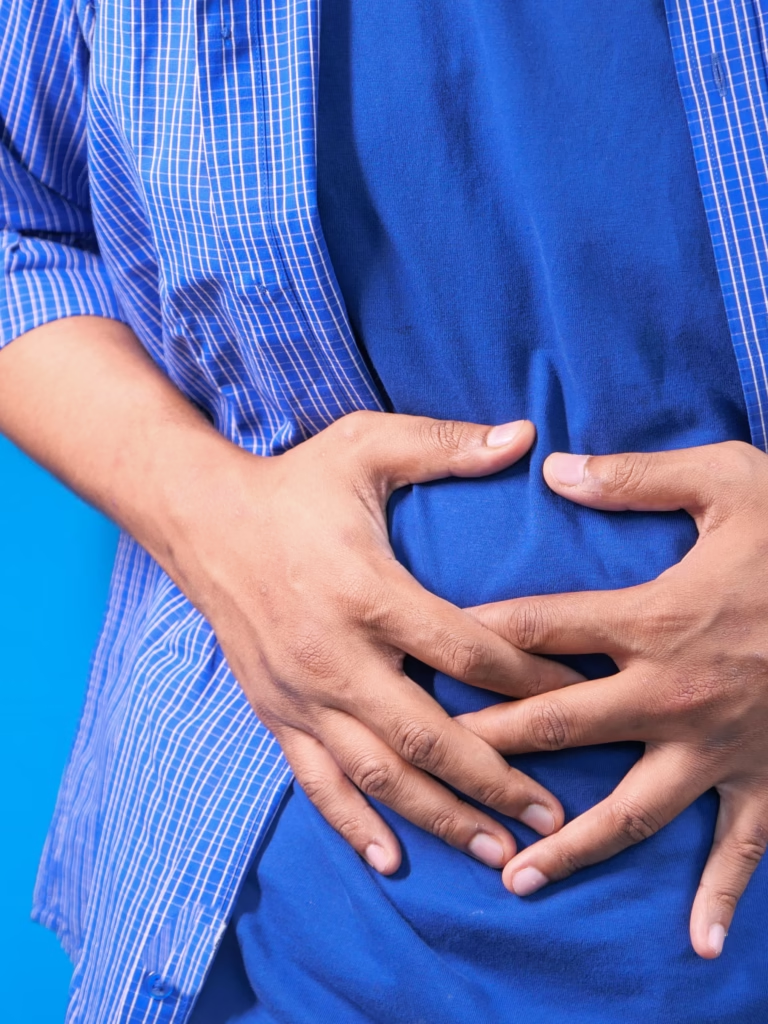
Trauma and traumatic stress may contribute to:
- Increased heart rate or heart problems
- Muscle tension
- Fatigue
- Headaches
- Digestive problems
- Breathing issues
- Cancer
- Chronic pain
- Sleep difficulties
- Somatic flashbacks
The body often continues carrying the effects of trauma long after the events have ended. If our nervous system is in a constant state of stress and activation due to ongoing or past trauma, the body doesn’t have the time it needs to rest and repair, which can cause negative effects on different systems in the body.
Emotional Trauma Responses
Common emotional reactions include:
- Anxiety or fear
- Shame or worthlessness
- Guilt or self-blame
- Sadness or grief
- Anger or Irritability
- Emotional numbness
Emotions may feel overwhelming or difficult to access altogether in the moment of trauma or in the aftermath of trauma. Traumatic stress leaves us with various complex and intense emotions resulting from the experience of harm.
Cognitive Trauma Responses
Trauma can affect thinking by contributing to:
- Difficulty concentrating
- Memory problems
- Racing thoughts
- Intrusive memories or images
- Negative self-beliefs
- Distorted beliefs about others or about the world
The brain becomes increasingly focused on detecting potential threats in the environment or in relationships, which impacts our capacity for other cognitive processes. The acute stress associated with trauma can also disrupt or fragment the brain’s ability to create and store memories.
Relational Trauma Responses
Trauma frequently impacts relationships through:
- Difficulty trusting others
- Fear of abandonment
- Avoidance of intimacy
- Conflict in relationships
- Social withdrawal
- Challenges setting healthy boundaries
- Repetition of harmful relationships
Because many traumatic experiences occur within relationships, healing often involves rebuilding a sense of relational safety.
Are Trauma Responses Always Caused by Trauma?
Not every emotional reaction or coping strategy is a trauma response. Stress, personality, temperament, mental health conditions, and life experiences all influence how people respond to challenges. However, when reactions seem disproportionate, automatic, repetitive, or difficult to control, particularly following overwhelming experiences, they may reflect adaptations that developed in response to trauma. A comprehensive assessment by a trauma-informed mental health professional can help determine what factors are contributing to someone’s symptoms.
Can Trauma Responses Change?

Yes! One of the most encouraging findings from trauma research is that the brain and nervous system remain capable of change throughout life. Healing does not mean forgetting what happened. Instead, it often involves helping the nervous system learn that the danger has passed and developing new ways of responding to stress in the present and in the future.
Treatment or support to help address trauma responses may include:
- EMDR (Eye Movement Desensitization and Reprocessing)
- Parts work and Internal Family Systems (IFS)
- Psychodrama and experiential therapies
- Somatic and body-based approaches
- Expressive arts therapies
- Mindfulness practices and yoga
- Group therapy
- Family or couples therapy
- Support groups
As healing occurs, many trauma responses become less intense, less frequent, and easier to recognize before they take over.
A Trauma-Informed Perspective
Trauma-informed care encourages us to view symptoms through a different lens.

Instead of asking: “What’s wrong with this person?” we begin asking: “What happened to this person?” and perhaps even more importantly, “How did these responses help them survive?”
Many behaviors that appear problematic today were once useful adaptations to overwhelming circumstances. Recognizing this can replace shame with curiosity and self-compassion.
A trauma response is the mind and body’s natural reaction to overwhelming experiences. Whether someone fights, flees, freezes, fawns, or experiences another survival strategy, these responses are rooted in the nervous system’s attempt to promote safety.
Understanding trauma responses can help people make sense of their experiences, reduce self-blame, and recognize that healing is possible. With the right support, the same nervous system that learned to survive can also learn to feel safe, connected, and resilient once again.
About the Author:
Dr. Scott Giacomucci, DSW, LCSW, BCD, CGP, FAAETS, TEP (he, him, his) is the Director, Founder, & Owner of the Phoenix Center for Experiential Trauma Therapy. He provides clinical services at the center as well as supervision, consultation, training, and organizational leadership.
Dr. Scott just released his most recent book, Trauma-Focused Psychodrama: Experiential Therapy for Complex PTSD